Interior Repaint in Central Phoenix: Why We Spray, Then Back-Roll
June 20, 2026 · 6 min read
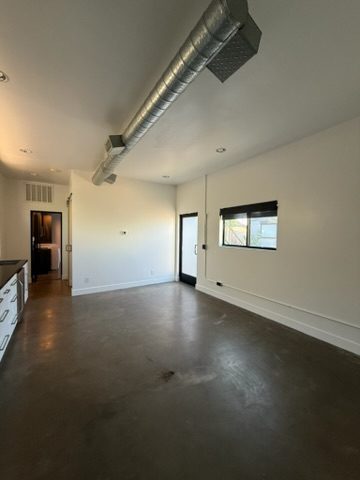
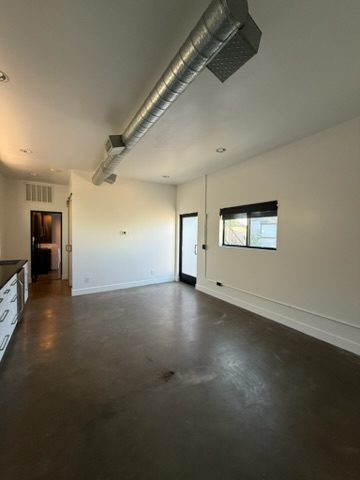
This was an interior repaint of a modern open studio in central Phoenix, the kind of space with smooth white walls, high open ceilings, exposed spiral ductwork, and polished concrete floors. A clean, simple look like that is unforgiving. Every patch, every thin spot, every ragged line shows. Getting it right came down to two things we take seriously: the masking and the way we apply the paint.
First, the drywall repairs
Before any paint, we repaired the drywall, patching damage and the spots where the ceiling had been opened up. A real patch isn't just a smear of compound: it's tape embedded in joint compound, then coats of mud feathered out wider than the last, sanded smooth so the repair sits flush with the wall. Then every patch gets spot-primed, and that step matters more than it sounds. Bare patch compound soaks up paint differently than the surrounding wall, so if you skip priming the repairs, they flash, showing up as dull or shiny halos right through the finish. Priming the patches is what lets the finished wall read as one continuous surface.
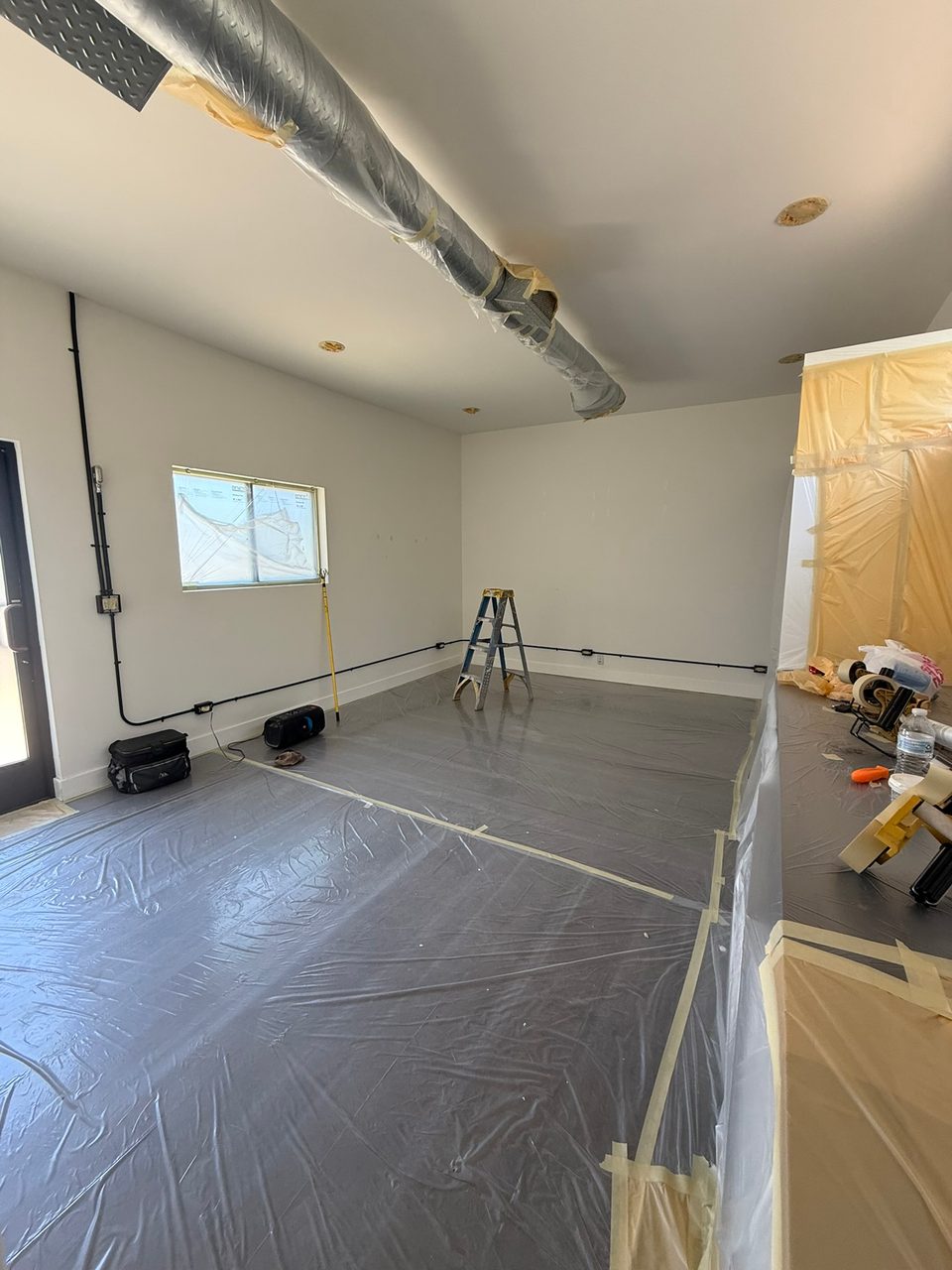
The masking: why the prep photos look like overkill
If you look at the prep photos, the masking looks like overkill. It isn't. We wrapped and protected the exposed ductwork, covered every inch of the floors in plastic, bagged the cabinets and the washer and dryer, and tented off the showers. There's a reason it's that thorough: we sprayed this job, and when you spray, you're atomizing paint into the air. Overspray drifts and settles on everything that isn't covered. So the meticulous masking isn't separate from the spraying. It's the price of spraying, and it's why a sprayed room comes out clean.
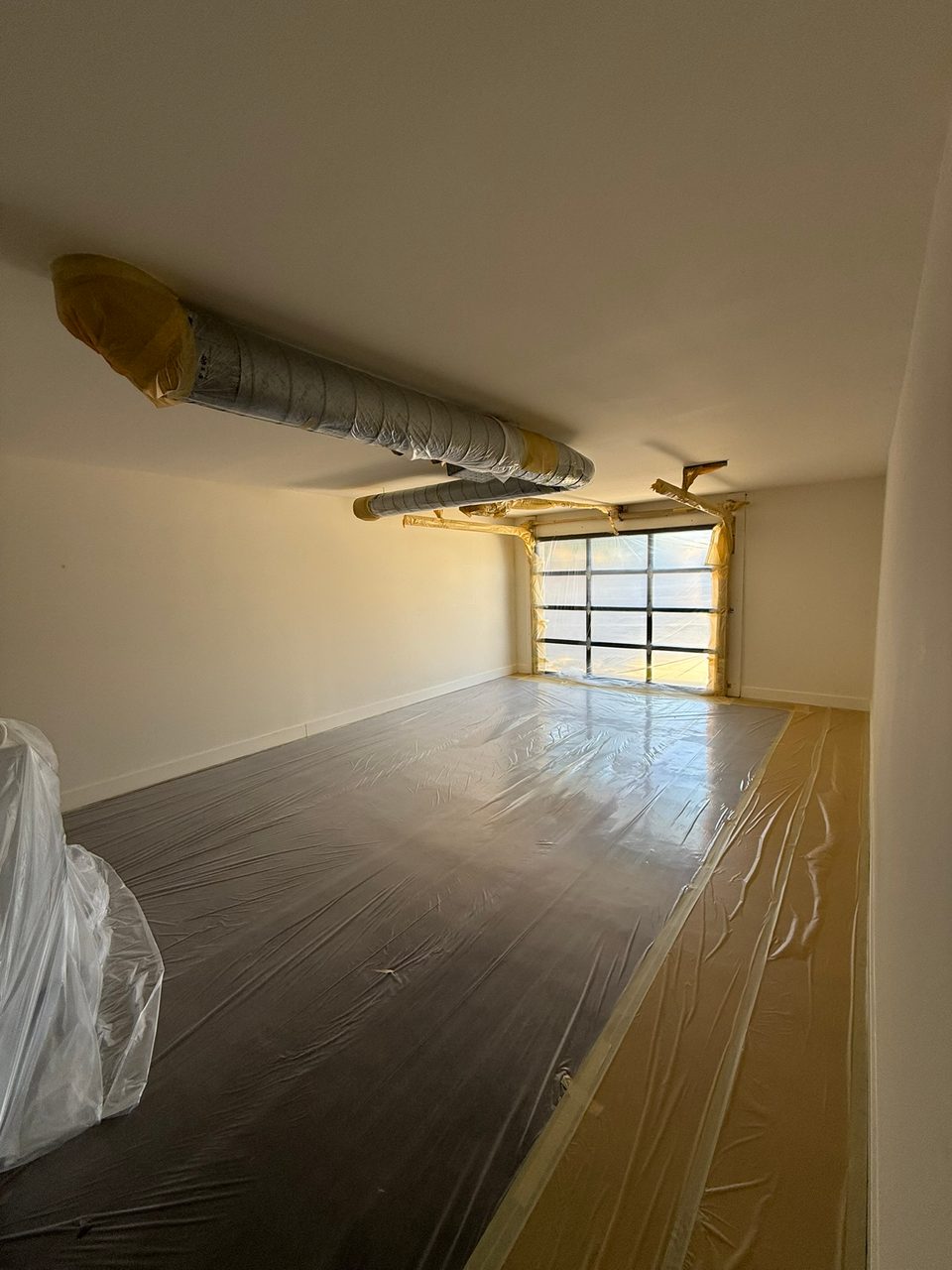
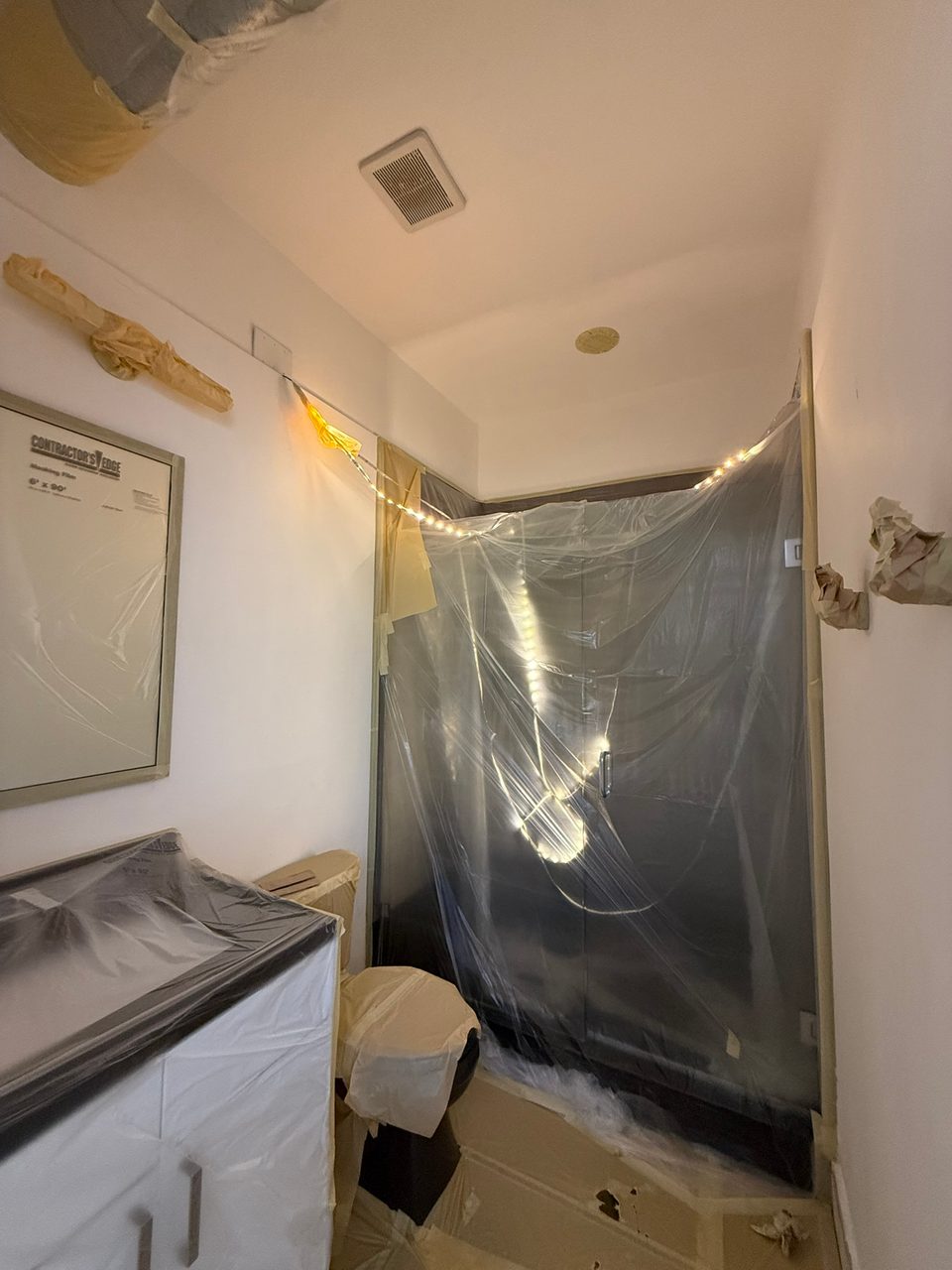
Why we spray, then back-roll
Spraying lays paint down fast and evenly across big open walls and ceilings, which is ideal for a space like this with a lot of surface and nothing in the way. But spraying alone isn't the whole story. On the walls, right behind the sprayer, we back-roll, going over the still-wet paint with a roller.
That second step is what makes the finish hold up. Back-rolling works the paint into the surface so it bonds instead of just sitting on top, and it evens out the film and kills the thin spots, dry spots, and misses that spraying alone can leave behind. It also gives the whole wall a consistent surface, so it reflects light the same way everywhere with no spray passes telegraphing through. Spray for the even lay-down and the speed. Back-roll the walls for the full, even coverage that lasts.
An interior is a great Phoenix summer project
The part most people miss here: summer is a great time to paint the inside of your home. The work happens in the air conditioning, and stable temperature and humidity are exactly what interior paint wants. Each coat levels out and cures evenly, and recoat times stay predictable. Running the AC keeps you comfortable and gives the finish a steadier condition to set up in. While outdoor projects wait for cooler weather, a full interior is one of the best things you can do in a Phoenix summer.
The result
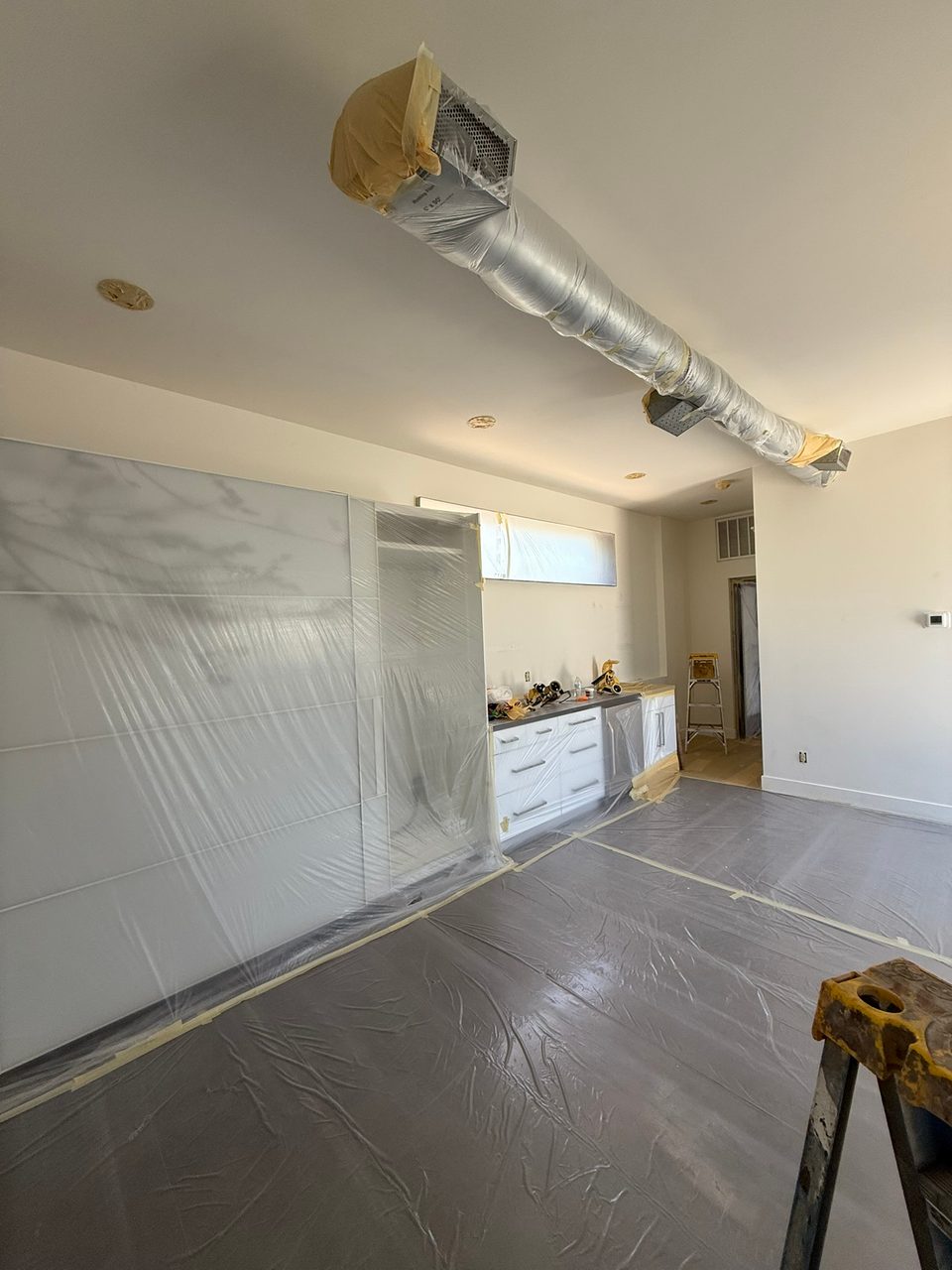
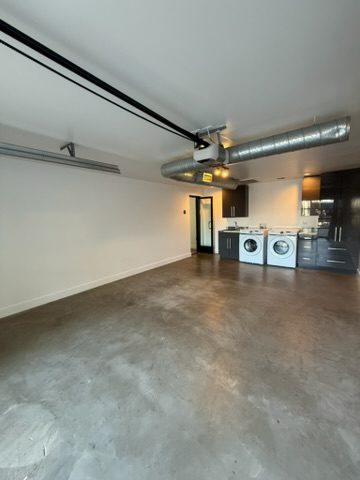
The studio came out exactly as clean as the look demands: smooth, uniform white walls and ceilings with crisp lines at every edge, the exposed spiral ductwork left clean against the ceiling, and a finish that's even from corner to corner. You can see the masking, prep, and finished photos in our gallery.
This was a showcase of our interior painting and the drywall repair that comes before it. For more on planning interior work here, see our guides on painting your interior during a Phoenix summer and choosing the right sheen for every room.
Frequently asked questions
- What does it mean to spray and back-roll, and why do it?
- Spraying lays the paint down fast and evenly across large walls and ceilings. Back-rolling means going over that still-wet sprayed paint with a roller right behind the sprayer, which we do on the walls. It works the paint into the surface for better adhesion, evens out the film, and eliminates the thin or missed spots spraying alone can leave. You get the speed and smooth lay-down of spraying plus the full, even, durable coverage of rolling.
- Why is there so much masking and plastic before an interior spray job?
- Because spraying atomizes paint into the air, and overspray settles on anything that isn’t covered. So we wrap and protect the ductwork, cover the floors, bag the cabinets and appliances, and tent off the showers. The thorough masking is what makes a sprayed job come out clean, and it protects everything in the room.
- Do you have to prime drywall patches before painting?
- Yes. Bare patch compound and bare drywall absorb paint differently than the painted wall around them, so unprimed repairs “flash” — they show up as dull or shiny halos through the finish even after the topcoats. Spot-priming every patch is what lets the finished wall read as one continuous, uniform surface.
- How many coats of paint does an interior repaint need?
- It depends on the surface and the color, but a quality interior repaint takes multiple coats for full, even coverage, especially a clean white over fresh drywall repairs. Spraying and back-rolling the walls, over properly primed patches, is what gets that coverage looking uniform from corner to corner.
- Is summer a good time to paint the interior of a Phoenix home?
- It’s one of the best times. The work happens in the air conditioning, and stable temperature and humidity are ideal for interior paint to level and cure evenly. While exterior projects wait for cooler weather, a full interior is a great way to use the warm season.
Ready for a fresh coat?
Get a Free Estimate